
The Hidden Costs of Cheap CMMC Readiness Assessments

A CMMC readiness assessment is often treated as a starting point in the compliance process. You select a provider, complete the assessment, and move closer to certification. However, not all readiness assessments are built to prepare organizations for what happens next. This issue isn’t limited to CMMC audit checklists. It also applies to readiness assessments that rely on surface-level validation rather than operational testing.
Why Low-Cost CMMC Readiness Assessments Fall Short
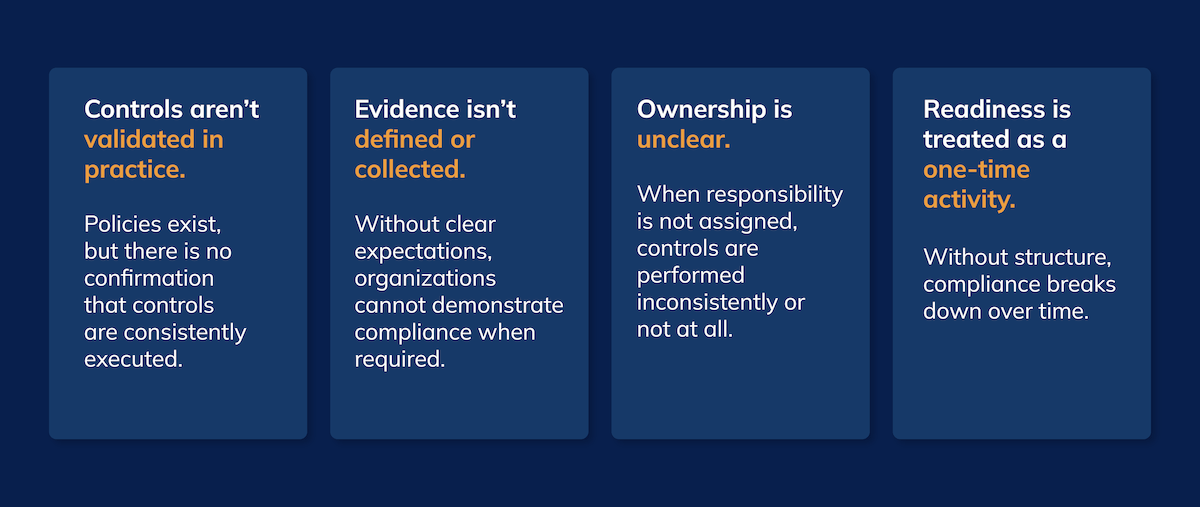
Lower-cost assessments typically focus on confirming that policies exist rather than validating whether controls are implemented and functioning. Interviews are conducted, documentation is reviewed, and requirements are checked off, which may create the appearance of progress, though it rarely reflects true readiness.
The gap between documented controls and operational controls is where issues begin to surface. Policies may outline expectations, but without consistent execution and supporting evidence, those controls can’t be validated during an assessment. Assessors expect proof that controls are implemented and operating as intended.
Common Gaps in CMMC Readiness Assessments
Several common issues emerge in low-cost readiness assessments:
Consequences of Failed CMMC Readiness
These gaps often go unnoticed until they matter most. When CMMC requirements appear in a contract or an organization begins preparing for a formal assessment, the lack of validation, ownership, and evidence becomes immediately visible. At that point, organizations are forced into reactive remediation under compressed timelines.
The consequences extend beyond the assessment itself. Organizations may face delays in certification, additional consulting costs, and lost contract opportunities. For subcontractors, the impact can include being excluded from opportunities where primes require proof of readiness. In competitive environments, the difference between being prepared and unprepared can directly affect revenue and long-term positioning.
What a Strong CMMC Readiness Assessment Should Include
A strong CMMC readiness assessment takes a different approach. It validates that controls are operating as intended, defines required evidence, assigns ownership, and establishes a structure for maintaining compliance over time. The result isn’t just a checklist, but a system that can withstand audit scrutiny.
CMMC Readiness Is About Long-Term Compliance
CMMC readiness isn’t about completing an assessment. It’s about ensuring your organization can demonstrate compliance when it becomes a condition of award. A lower upfront cost may seem appealing, but if the assessment doesn’t prepare you for certification, the true cost will be realized later.
Clark Schaefer Consulting can help you evaluate your readiness and build a path toward sustainable CMMC compliance. We’re happy to talk through where you are today and what comes next. Contact our team to get started.
Expert Contributors